Not your usual pesto – fresh, nutty and full of Thai flavour
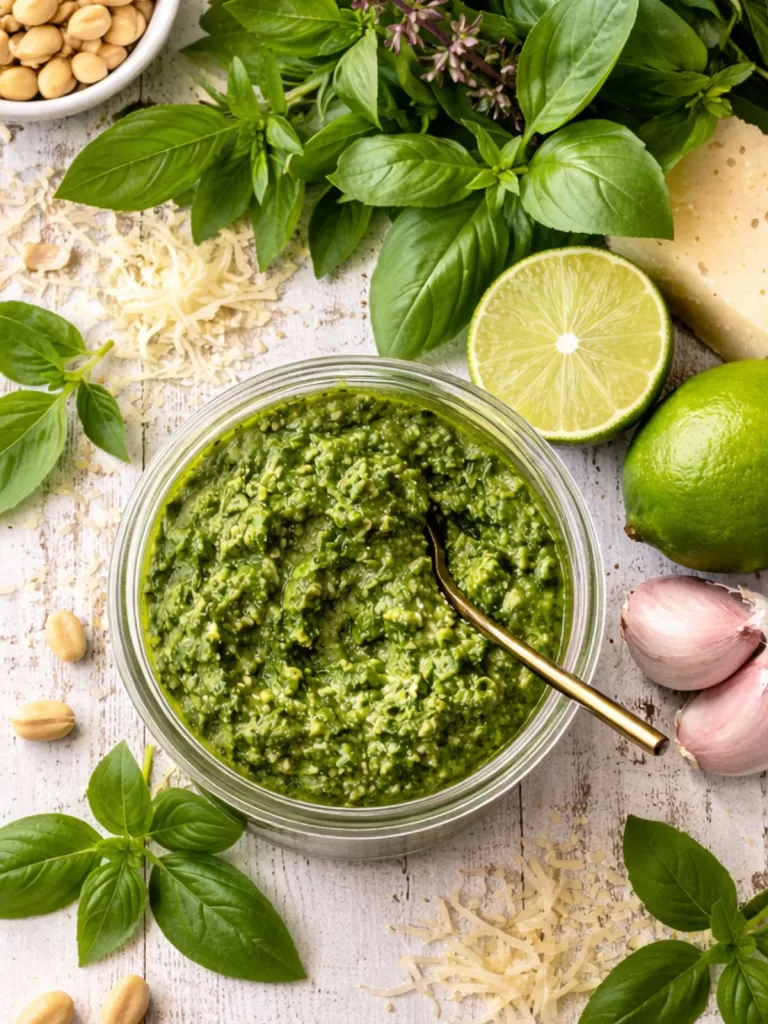
This Thai Basil Pesto with Peanuts, Lime and Garlic is a fresh, flavour-packed twist on traditional pesto that’s perfect for using up an abundance of Thai basil. Blended with baby spinach, roasted peanuts, lime juice and a splash of fish sauce, it has a bold, savoury flavour that’s balanced with just enough acidity and sweetness. It comes together in minutes and is incredibly versatile – perfect for pasta, grilled meats, sandwiches or anything that needs a punch of flavour.
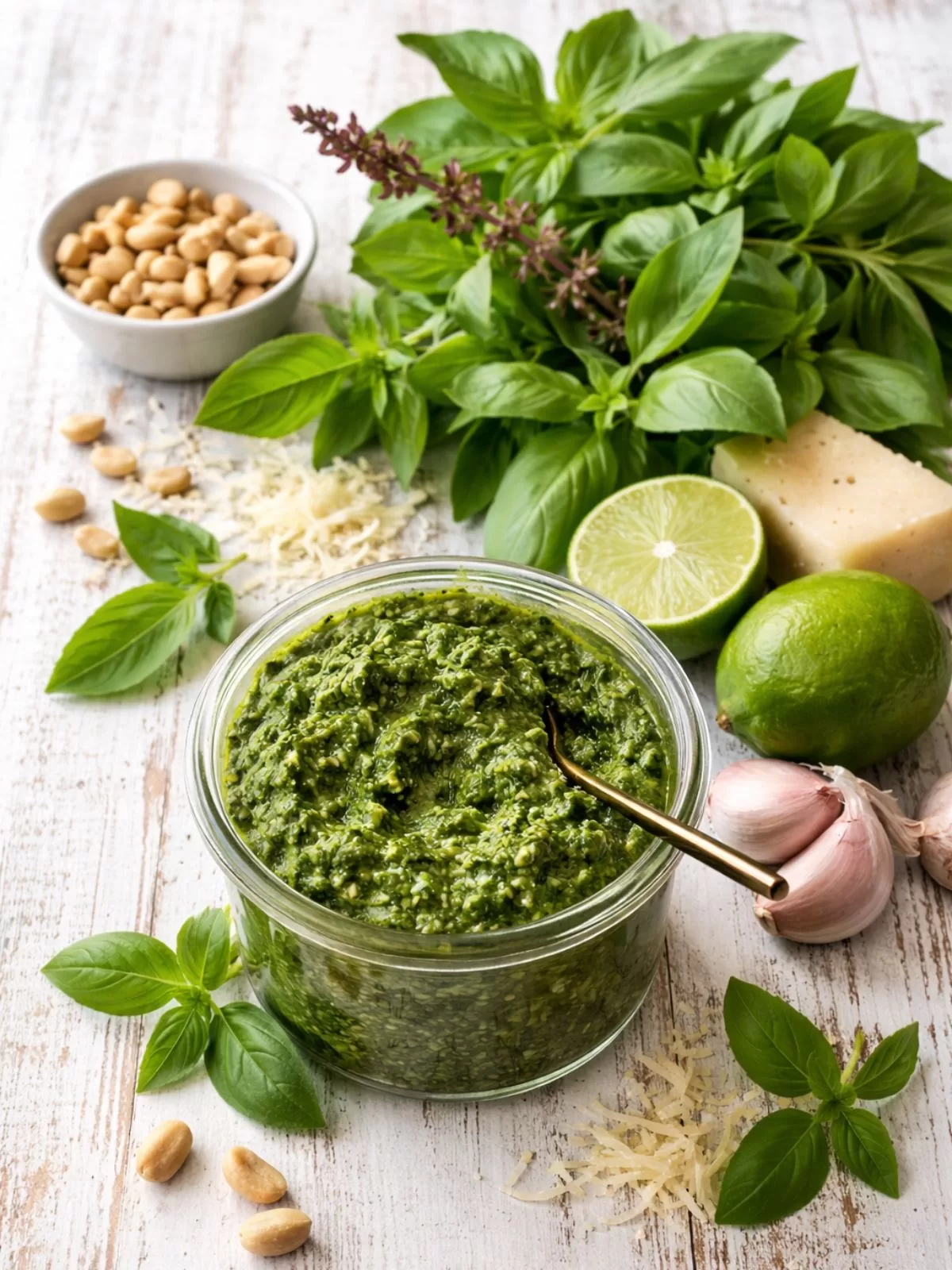
With Thai basil growing like crazy in my garden, this pesto was the perfect way to use a big handful all at once. Thai basil has a completely different flavour to regular basil, with subtle aniseed notes that pair beautifully with peanuts, lime and garlic. This pesto also freezes brilliantly, which means you can bottle up those fresh, summery flavours and pull them out later when you want a quick hit of something bright and punchy.
What Is Thai Basil?
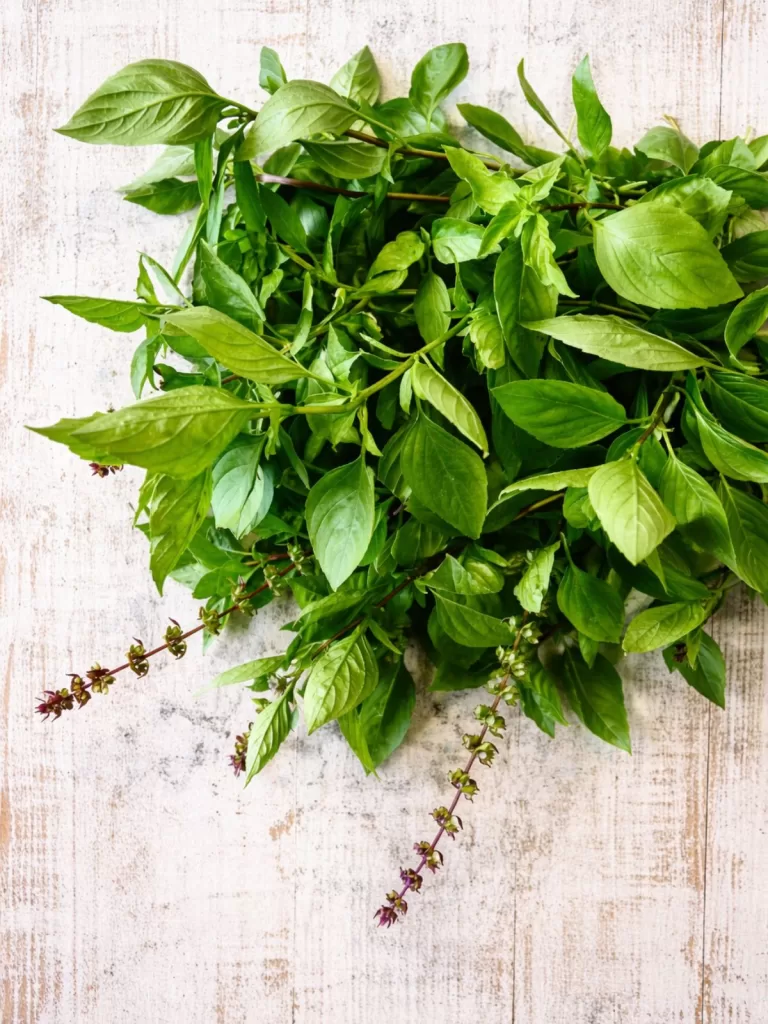
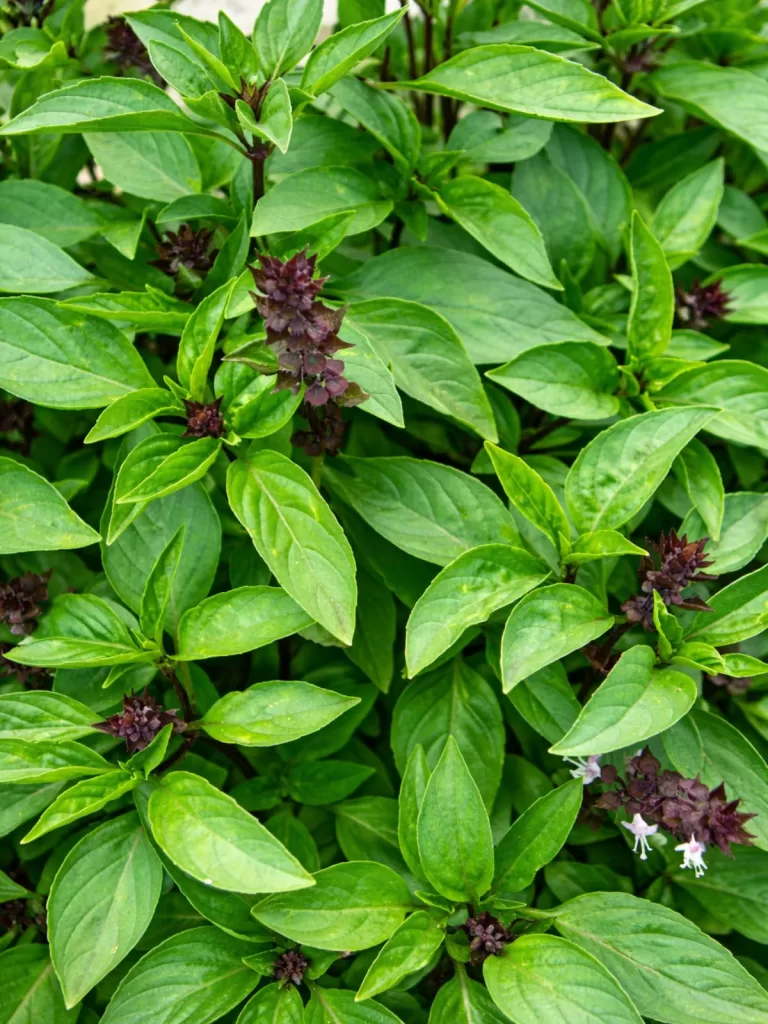
Thai basil is a variety of basil commonly used in Southeast Asian cooking, especially in Thai dishes. It has a slightly sweet, peppery flavour with subtle anise and clove notes, which sets it apart from regular Italian basil.
The leaves are narrower and usually attached to purple-tinged stems, and the flavour holds up well in cooking without losing its aroma. Thai basil is often used in curries, stir-fries and soups, and it works beautifully in sauces like this pesto where its unique flavour can really shine.
Why You’ll Love This Thai Basil Pesto
- A twist on classic pesto – Thai basil, peanuts and lime give this pesto a bold, fresh flavour that’s very different to the traditional version.
- Quick to make – Everything blends together in minutes using a food processor or blender.
- Great way to use excess basil – Ideal when Thai basil is growing faster than you can cook with it.
- Incredibly versatile – Use it with pasta, grilled meats, sandwiches, pizzas or as a dip.
- Freezer-friendly – Freezes beautifully so you can enjoy it long after basil season ends.
How to Make Thai Basil Pesto
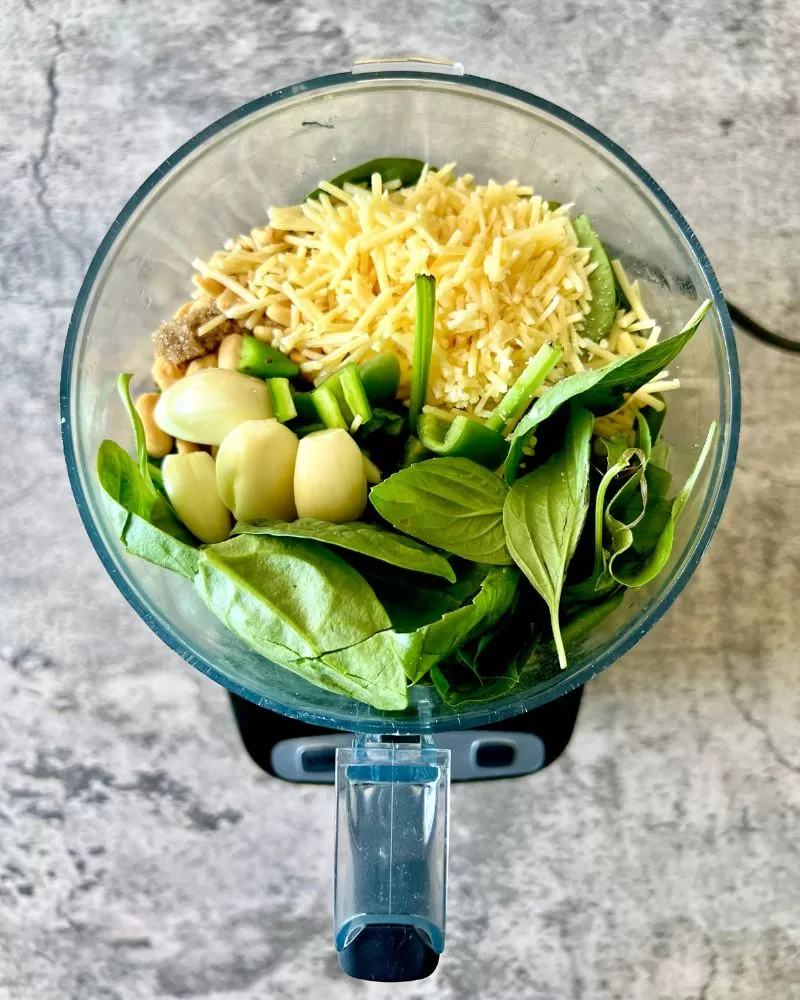
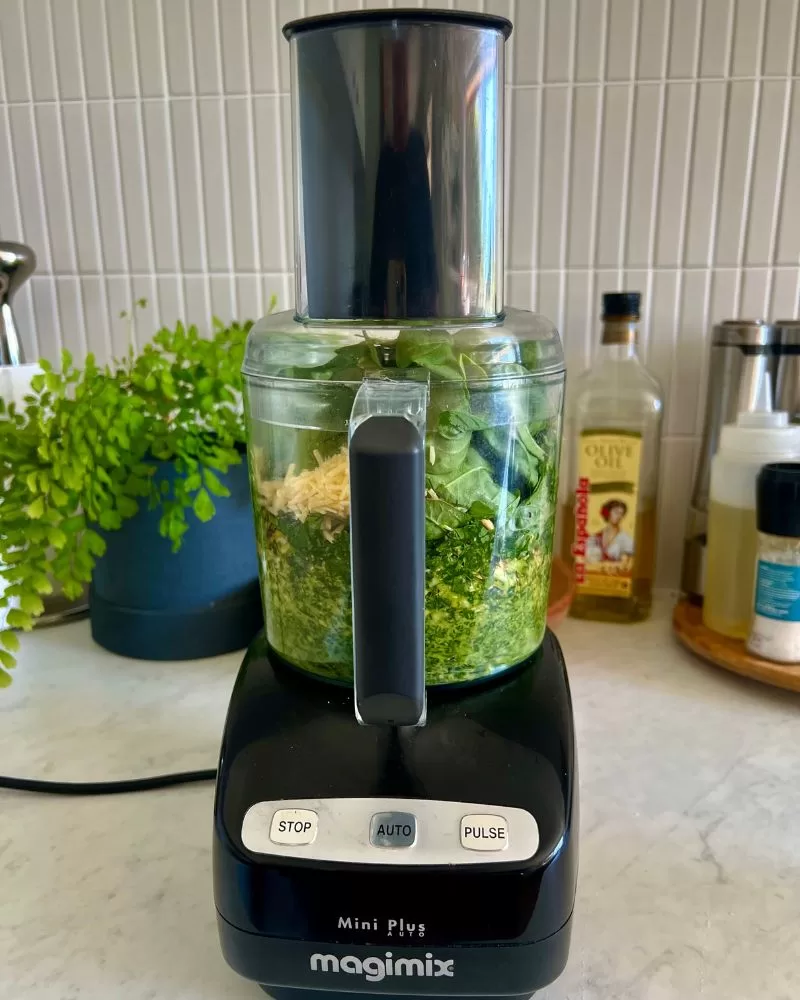
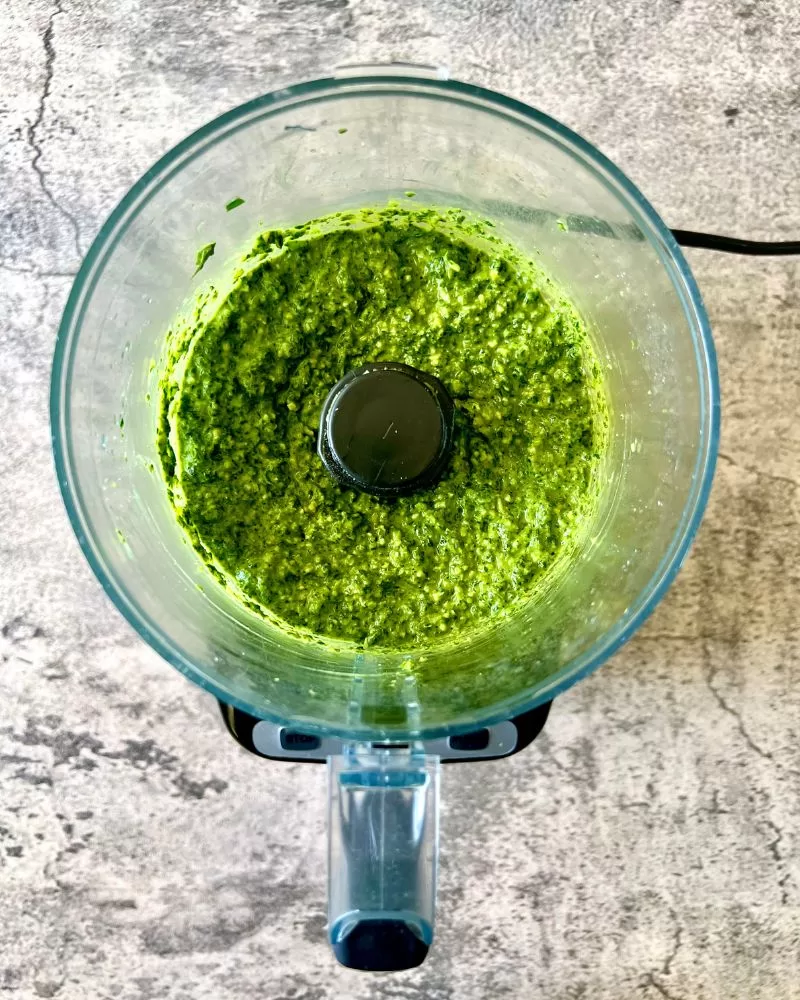
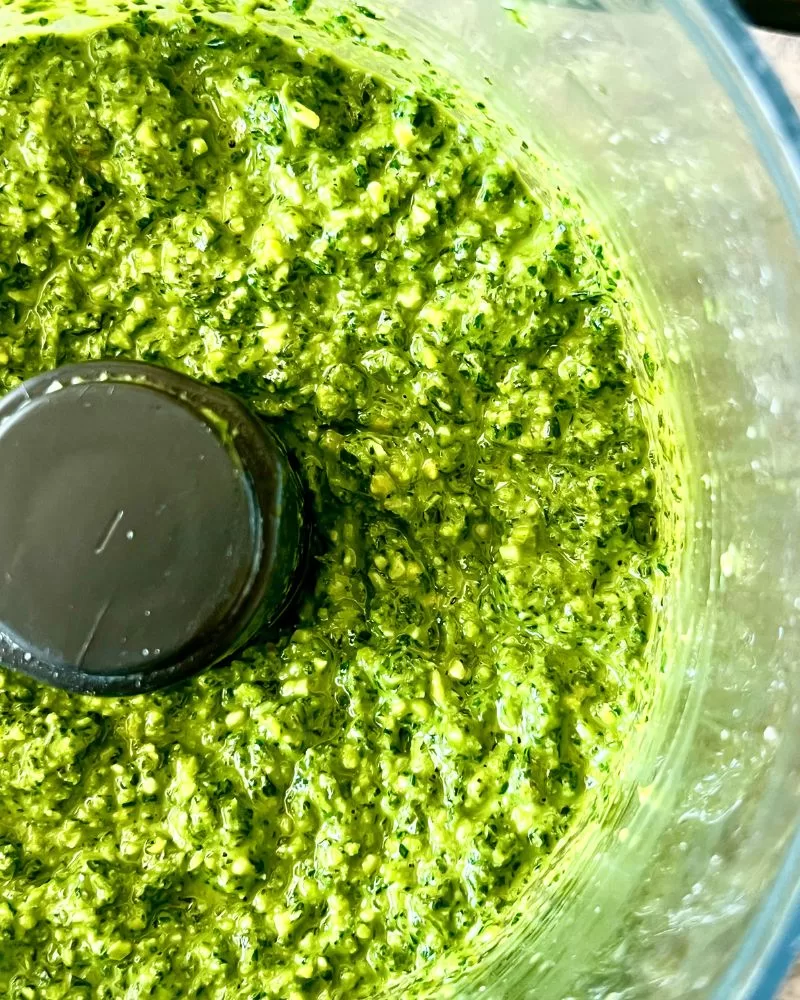
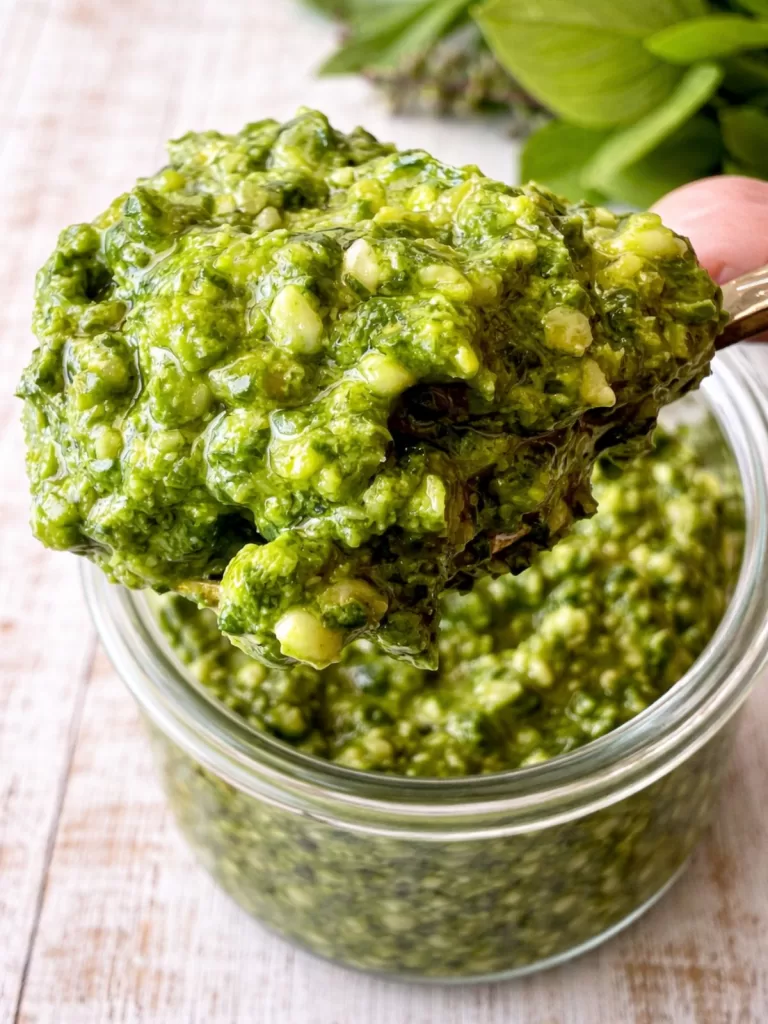
This Thai basil pesto comes together quickly using a food processor, blender or Thermomix. Simply add the ingredients, blend until roughly chopped, then stream in the oil until you reach your preferred texture. You can keep it slightly chunky or blend it smooth, depending on how you plan to use it.
If you don’t have any appliances, a mortar and pestle also works beautifully — it takes a little longer but gives a great rustic finish.
Thai Basil Pesto Thermomix Method
This Thai Basil Pesto can also be made using a Thermomix. Follow the Thermomix instructions in the recipe card below for a quick and easy method.
Tips for Making and Serving Thai Basil Pesto
- Taste as you go – Thai basil, lime and fish sauce can vary, so adjust seasoning at the end.
- Add oil gradually – This helps control the texture, whether you like it chunky or smooth.
- Use roasted nuts – Roasted peanuts give a deeper, nuttier flavour than raw.
- Scrape the bowl – Stop and scrape down the sides for an even blend.
- Finish with oil on top – A thin layer of oil helps keep the pesto fresh and green in the fridge.
Variations and Substitutions
- Nut swaps: Cashews, almonds, walnuts or macadamias all work well in place of peanuts.
- No fish sauce: Leave it out and season with extra salt instead.
- Vegan option: Omit the parmesan and add nutritional yeast or extra nuts for depth.
- Less heat: Deseed the chilli or leave it out completely.
- Regular basil: Swap Thai basil for Italian basil and use pine nuts or almonds instead.
Serving Suggestions
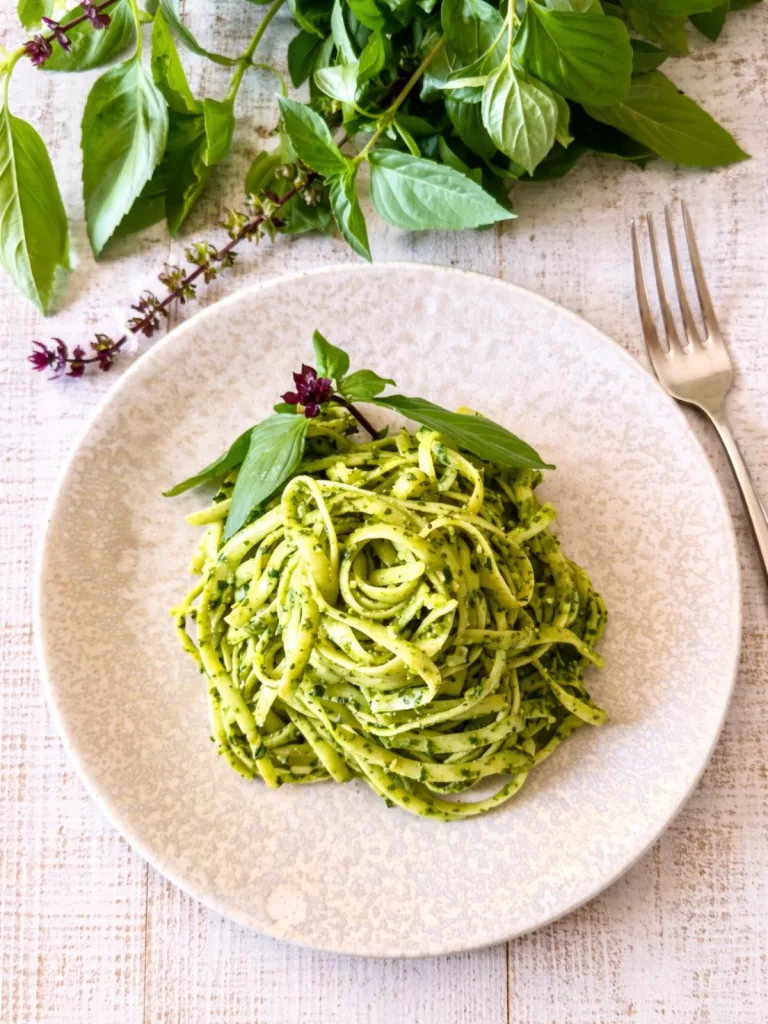
- Pasta: Toss through hot pasta with a splash of pasta water.
- Grilled meats: Spoon over grilled chicken, prawns or tofu.
- Pizza: Use as a base sauce or dollop over cooked pizza.
- Sandwiches and wraps: Spread onto bread, rolls or wraps for extra flavour.
- Dips and dressings: Stir through yoghurt, mayo or sour cream, or thin with oil and lime juice for a salad dressing.
Storing and Freezing
Store the Thai basil pesto in an airtight container or glass jar in the fridge and use within 5–7 days. To help prevent browning, pour a thin layer of oil over the surface before sealing and refrigerating.
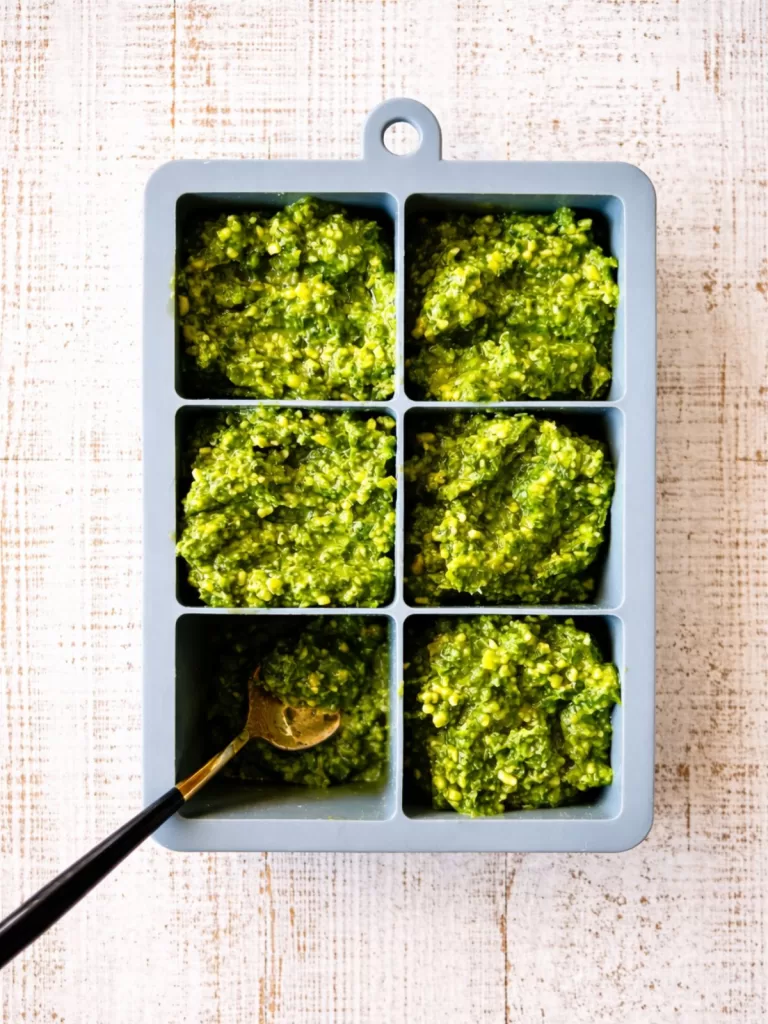
This pesto also freezes very well. Spoon it into ice cube trays and freeze until solid, then transfer the cubes to a freezer-safe container or bag. Label and date, then freeze for up to 3 months. Thaw in the fridge or at room temperature, give it a good stir, and use as needed.
FAQ’s
Can I use regular basil instead of Thai basil?
Yes. Regular Italian basil works well, but the flavour will be milder and more traditional. Swap the peanuts for pine nuts or almonds and omit the fish sauce for best results.
Is Thai basil pesto spicy?
It has a mild warmth from the chilli, but you can deseed it or leave it out entirely for a milder pesto.
Can I make this pesto vegan?
Yes. Omit the parmesan and fish sauce, then add nutritional yeast and season with salt to taste.
What can I use this pesto for besides pasta?
It’s great with grilled meats, spread on sandwiches, used as a pizza base, or stirred through yoghurt or mayo for a dip.
Why did my pesto darken in the fridge?
Pesto can oxidise when exposed to air. A thin layer of oil on top helps keep it fresh and green.
This Thai Basil Pesto with Peanuts, Lime and Garlic is a fresh, flavour-packed way to use up an abundance of Thai basil while adding something a little different to your cooking. Quick to make and incredibly versatile, it’s perfect for everything from pasta and grilled meats to sandwiches and dips. If you give it a try, leave a comment below and let me know how you used it — I’d love to hear.
More Recipes:
- Chilli Garlic Crisp Oil
- Indian Mint Chutney
- The Best 5 Minute Tomato Sauce for Pizza + Pasta
- Chilli Jam (The Absolute Best!)
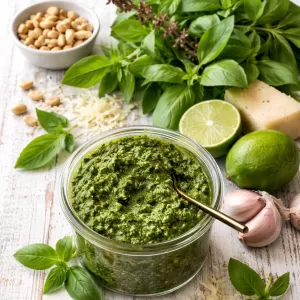
Thai Basil Pesto with Peanuts, Lime and Garlic
Equipment
- Food processor, blender or mortar & pestle
Ingredients
- 2 cups packed Thai basil leaves
- 1 cup baby spinach leaves
- 3 cloves garlic
- ¼ cup unsalted roasted peanuts (see notes)
- ¼ cup grated parmesan cheese
- 1 long green chilli, roughly chopped (optional or deseeded for less heat)
- Juice of 1 lime
- 2 teaspoon fish sauce (optional)
- 2 teaspoons brown sugar
- Salt & pepper, to taste (see notes)
- ½ cup neutral oil (canola, rice bran, sunflower, grapeseed, peanut etc)
Instructions
- Place all ingredients (except oil) into the bowl of a food processor and pulse until roughly chopped.
- With the motor running, gradually add the oil in a thin steady stream until well combined. Transfer to an airtight container or glass jar and chill until required. Serve as desired.
THERMOMIX INSTRUCTIONS
- Place all ingredients (except oil) into the TM bowl. Mix for 15 seconds, Speed 7. Scrape down the sides.
- Add your oil of choice, cover, mix for 10 seconds, Speed 4.
- Use immediately or transfer to an airtight container or glass jar and chill until required.
Notes
- COOKS NOTES:
Oven Temps: Oven temperatures are for conventional, if using fan-forced (convection), reduce the temperature by 20˚C.
Measurements: We use Australian tablespoons and cups: 1 teaspoon = 5 ml, 1 tablespoon = 20 ml and 1 cup = 250 ml.
Herbs: All herbs are fresh (unless specified) and cups are lightly packed.
Vegetables: All vegetables are medium size and peeled, unless specified.
Eggs: We use extra-large size and eggs are 55-60 g each, unless specified. - Fish sauce and salt: If using fish sauce, you may only need a small pinch of salt or none at all. Taste after blending and adjust as needed. If omitting fish sauce, add salt to taste.
- Nut options: Roasted peanuts add great flavour, but cashews, almonds, walnuts or macadamias can be used instead.
- Texture: For a thicker pesto, reduce the oil slightly. For a looser, drizzle-style pesto, add a little extra oil until you reach your preferred consistency.
- Vegan option: Omit the parmesan and fish sauce, then add nutritional yeast and season well with salt.
- Using regular basil: You can swap Thai basil for Italian basil. Use pine nuts or almonds instead of peanuts and omit the fish sauce and brown sugar for a more classic pesto flavour.

Leave a Reply